
The evolution of skatepark design
We spoke with Lauris Gouiran of Constructo skatepark Architecture. Constructo is a French architecture firm specializing in skatepark design, operating since 2005. They work mainly in France, but have also worked elsewhere in Europe and around the world, including together with Nine Yards Skateparks. They have developed more than 200 skateparks in 15 years. Lauris tells us about all the developments in skatepark design, a sector that is growing fast, and shares his vision on the field, its trends and developments.
More attention and space for skateparks
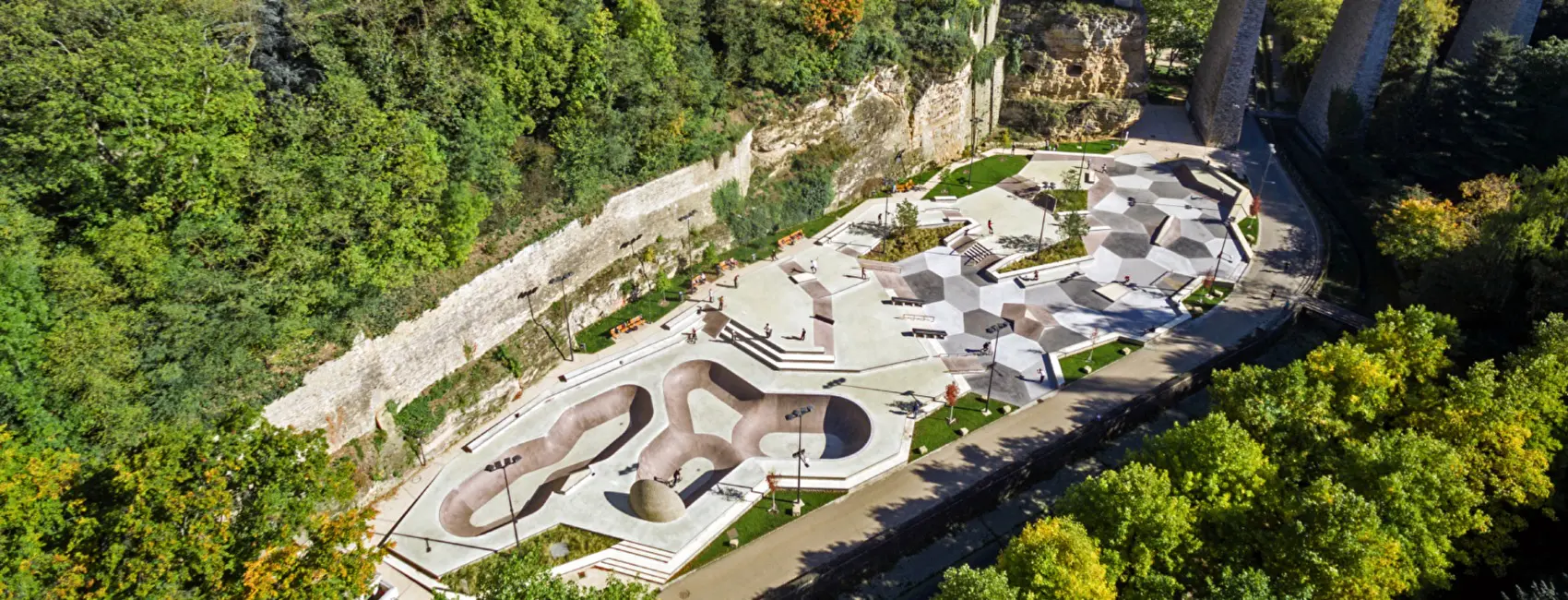
So we have more than 15 years of experience designing skateparks. In Constructo's early years, we really wanted to offer skaters a new vision of skateparks. This was influenced by skatepark projects mainly in the United States, but also by integrating our own vision and emphasizing the architectural aspect of our projects. That was at odds with the modular skateparks of the time, which were more of an intrusion on the landscape of the site. At the same time, we never lost sight of the functional side of our skateparks.
Naturally, the first projects that came out of our hat were very different from the projects we design today. Budgets are no longer the same; they are bigger, and so are the surface areas and locations. In the past, skateparks were often tucked away behind sports complexes and in the suburbs; today, skateboarding and skateparks are taking their place in the heart of cities and urban life.
The evolution of skatepark design
Our wish and vision at Constructo is that every skatepark should be unique, despite fairly similar programs in general. Over the years, partly thanks to our feedback, skatepark design has evolved, and it still is. At Constructo, for example, we have automated some processes and introduced basic principles, but the search for new shapes remains a constant.
Skatepark designs are very diverse these days. Personally, I draw inspiration from everywhere: from skate videos (and there are a lot of them) and architecture in general, but also from many other sources: art, history, geography, local culture and so on. There are also trends that come and go; right now we see a lot of ‘slappies’, something nobody asked for a few years ago. We evolve along with it. We watch, we consult with locals and, above all, we actually skate our own projects (and those of others). Every skatepark project is a prototype, and the only way to verify the quality of our projects is to skate them.
Professionalizing, but always experimenting
The 2024 Paris Olympic Games have had a real impact on the skatepark market in France. Surface areas are growing and specifications are more precise, especially for training facilities for elite athletes. This is both a good and a bad thing. Good, because we have more room for our creativity, and bad, because there is a tendency to standardize elements. Fortunately, there are also ongoing projects entirely outside the Olympic framework, with much more open programs where experimentation is truly possible (such as the Carry-Le-Rouet project in the south of France).
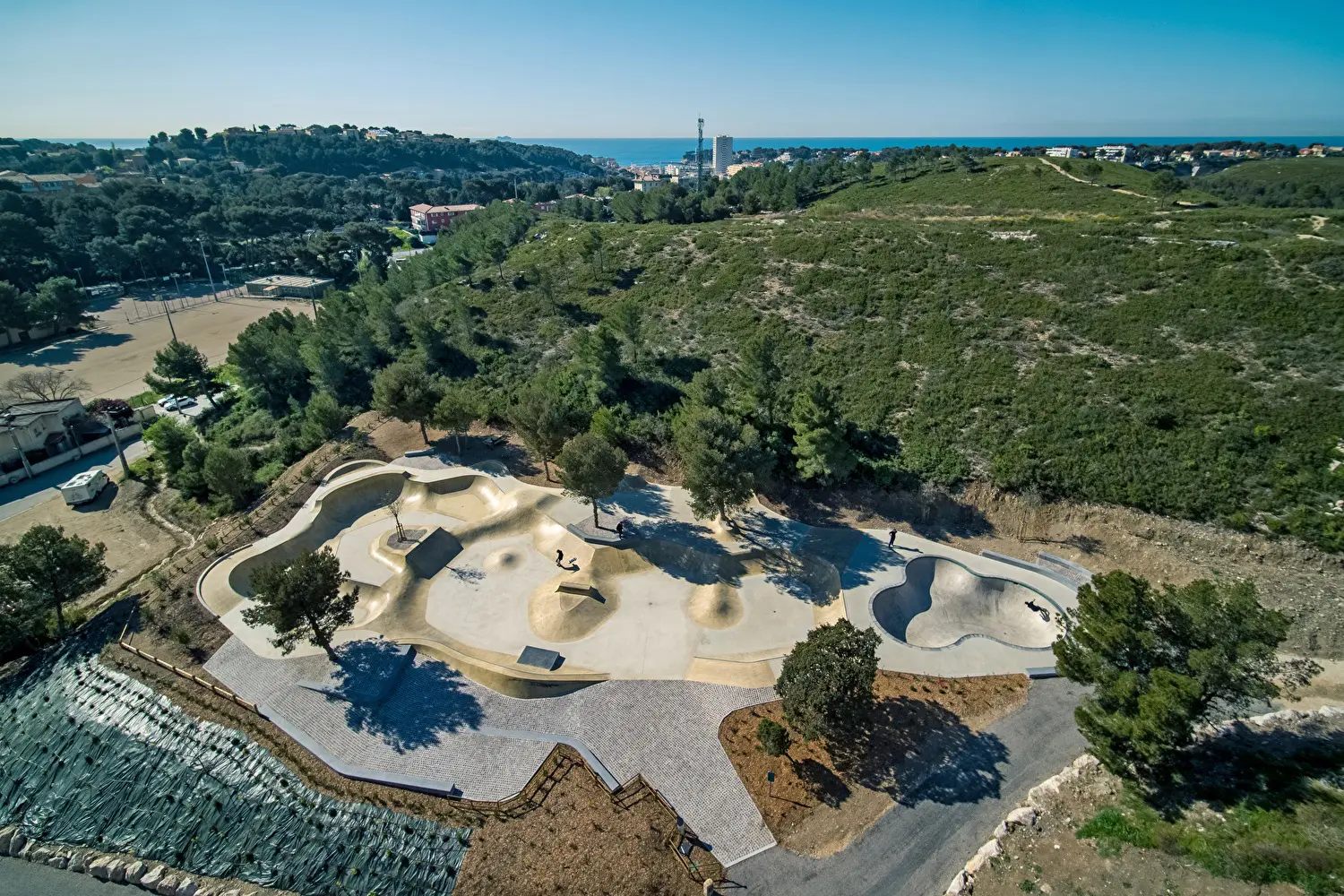
The Carry-Le-Rouet skatepark design - source: Vulcano Skateparks
The evolution of the past 15 years will continue into the future. Our skatepark projects keep developing and our vision grows along with them, just like the way people skate and skatepark design in general.

Lauris Gouiran
- Skatepark designer & architect at Constructo Skatepark Architecture
