
Skateboard-friendly urban design: the path to innovative public space
Jesper Kuipers, part of the Nine Yards team, wrote the essay 'Beyond concrete boxes: Skateboarding, Landscape Architecture, and Urban space'. We dove into the question his essay raises: "What do we gain when skateboarders are not discouraged, criminalized or forced to leave, but are instead actively involved, supported and invited to contribute to the design and development of those spaces?"
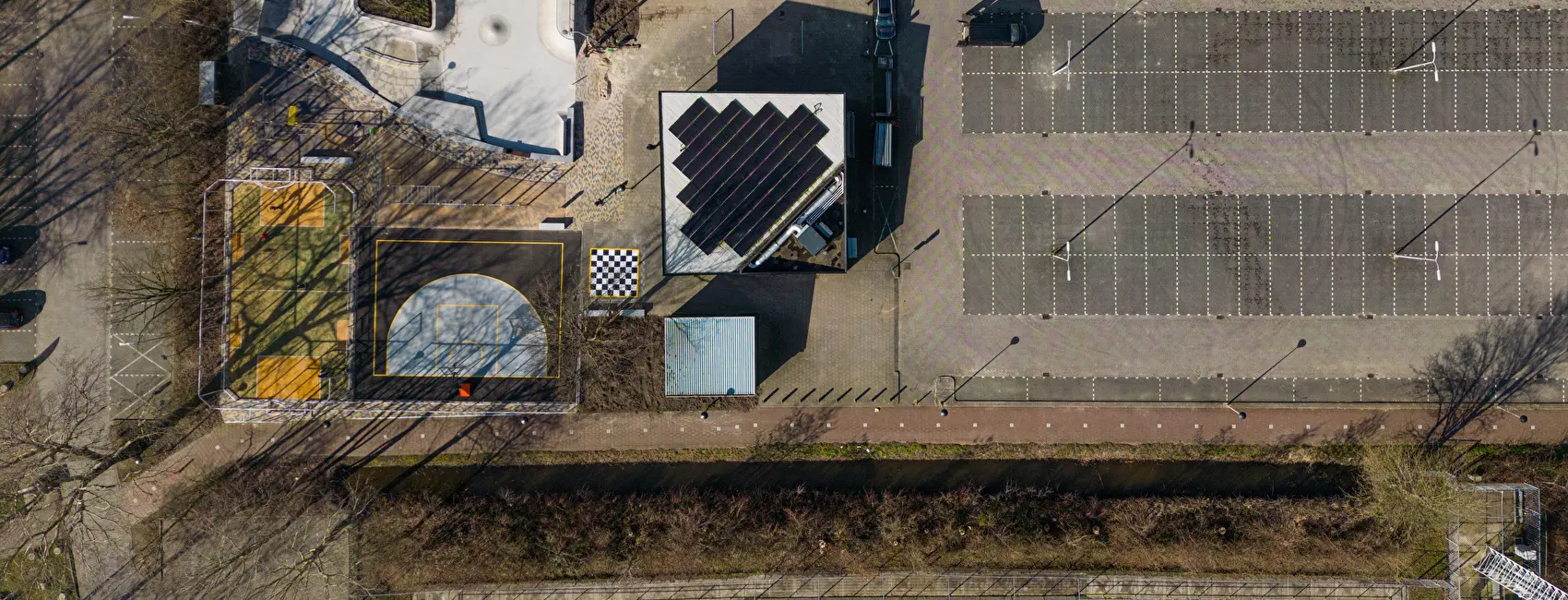
In today's dynamic and ever-evolving urban environments, it is essential to think about the inclusiveness of public spaces. A growing movement is calling for skateboarders to be integrated into the design and development of urban landscapes. We explore the possibilities of skateboard-friendly urban design and advocate for the development of integrated, inclusive skate landscapes that reflect the diversity of our cities.
Transforming public spaces
What would happen if skateboarders were no longer discouraged, criminalized or forced to leave public spaces, but were instead actively supported and invited to contribute to the design of those spaces? This question lies at the heart of a growing discussion about the transformation of public spaces. It is not just about skateboarders, but about the broader question of how we integrate diverse user groups and foster a sense of community in our cities.
The importance of interaction between people and their environment
Achieving interaction between skateboarders and the public environment leads to innovative and "open-minded" public spaces. That means spaces that offer opportunities for discussion, deliberation and spontaneous encounters between people with diverse points of view. It is about creating urban spaces that encourage social interaction, where contact with other identities arises and understanding between city dwellers grows.
From single-use to multifunctional
A major concern is the single-use nature of traditional skateparks, which only reinforce a one-dimensional perception of public space. Instead of confining skateboarding to fenced-off skateparks, we advocate for developing multifunctional skate landscapes that promote interaction between skateboarders and non-skateboarders. These places should accommodate a wide range of activities and interests, allowing diverse communities to come together and thrive. Examples are the Urban Sports parks in Zwijndrecht and Roosendaal.
The role of landscape architects
Landscape architects play a crucial role in shaping these skateboard-friendly urban designs. By making physical changes to public spaces, they integrate skate-friendly elements such as smooth paving, ledges, rails and transitions. They can also adopt a hybrid design approach that integrates skateboarding with other activities and users of public space.
Collaboration and advocacy
An integral part of the process is collaboration with stakeholders, including skateboarders, local communities, city officials and others. By actively involving skateboarders in the design and decision-making process, landscape architects ensure that their needs and perspectives are taken into account. They can also advocate for policy changes at the municipal level that promote skateboard-friendly urban design and, with it, inclusion.
The first step toward inclusive public spaces
Developing integrated and inclusive skate landscapes is not just a matter of urban planning, but also of social justice and inclusiveness. By embracing skateboard-friendly urban design, we celebrate the diversity of our cities and create spaces where everyone feels welcome and can grow.
By working together and taking action, we can bring about positive change and create cities that truly belong to everyone.
